Great style doesn’t require a designer wardrobe or a personal stylist. The best fashion styling tips are simple adjustments that create polish, balance, and confidence: mastering fit, playing with proportions, anchoring outfits with one quality piece, and using accessories to add personality. Once you understand a handful of core principles, you can transform what’s already in your closet into looks that feel intentional and effortlessly put together.
I used to think I needed to overhaul my entire wardrobe every season to look stylish, until I realized the women I admired weren’t buying more. They were styling smarter. A friend once told me she only shops twice a year but always looks polished, and her secret was learning how clothes should actually fit and how to balance silhouettes. That conversation changed everything for me.
The truth is, styling is less about trends and more about understanding what flatters your body, complements your lifestyle, and makes you feel like the best version of yourself. You don’t need to follow every runway moment or invest in a closet full of statement pieces. What you need are practical strategies that work with real life: getting dressed for work, running weekend errands, or meeting friends for dinner.
In this guide, you’ll find 12 specific, actionable tips that tackle the most common styling challenges. From color coordination and fit fixes to accessorizing with purpose, these are the tools that turn good outfits into great ones.
How I Chose These Styling Tips
I’ll be honest: I could have filled this list with every trendy hack that’s crossed my feed this year. But when I sat down to choose which styling tips to include, I kept coming back to one simple question, will this actually help you get dressed in the morning?
These twelve tips earned their spot because they passed my real-world test. Each one had to be actionable (something you can try tomorrow, not someday), budget-friendly (because not all of us have unlimited shopping funds), and realistic for busy lives. I’m talking about strategies that work whether you’re rushing kids to school, heading to an office, or building a wardrobe from scratch on a tight timeline.
What you won’t find here are trend-driven rules that’ll feel dated by next season. Instead, these are timeless strategies I’ve tested myself and heard echoed in your messages and comments over the years. They work across seasons, life stages, and personal style preferences. I’ve watched them transform how my friends approach their closets, and I’ve relied on them through my own style evolution, from new mom in yoga pants to someone who genuinely enjoys getting dressed again.
1. Know Your Color Palette (and Keep It Simple)
I spent years buying clothes in colors I thought I should wear, navy because it’s professional, black because it’s slimming, without realizing they washed me out completely. Then a friend casually mentioned I looked radiant in a rust-colored sweater, and something clicked. I started paying attention to which colors made people compliment my skin rather than ask if I was tired.
Here’s the truth: you don’t need to master complicated seasonal color analysis. Start simple. Stand in natural light with different colored items near your face and notice what makes your skin look clearer, your eyes brighter. For me, warm terracotta, cream, olive green, burnt orange, and denim blue became my core five. Everything I buy now lives in that family.
This approach transforms shopping. You stop second-guessing purchases because you know a camel coat will work with your existing wardrobe. Your closet becomes a mix-and-match playground instead of a collection of isolated pieces. Try limiting yourself to 5-7 colors that genuinely flatter you. You’ll get dressed faster and feel more confident every single time.
2. Invest in Tailoring, Not Just Shopping
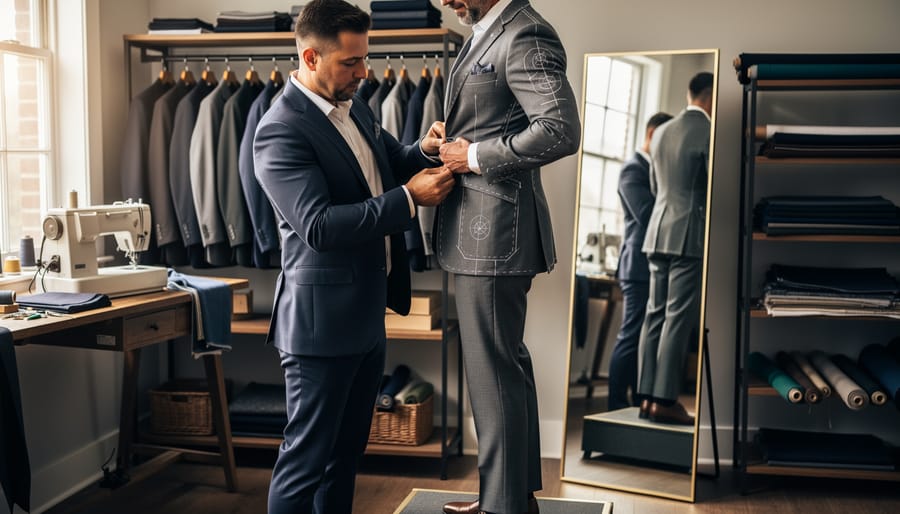
I’ll never forget the camel-colored blazer I found at a consignment shop for twelve dollars. It hung beautifully on the hanger, but when I tried it on, the sleeves dangled past my fingertips and the shoulders drooped. I almost put it back. Instead, I took it to my neighborhood tailor, spent another twenty dollars on alterations, and suddenly owned the most flattering blazer I’ve ever worn.
Here’s what nobody tells you: a $30 pair of jeans that fits you perfectly will always look better than $200 jeans that don’t. Tailoring transforms good-enough pieces into favorites you reach for constantly. Hemming pants to the right length, taking in a loose waist, or shortening sleeves takes minutes for a professional but changes everything about how a garment looks on your body.
Start by finding a local tailor (ask friends for recommendations or check Google reviews). Budget $15-40 per alteration depending on complexity. When you’re shopping, look for pieces that fit well in the shoulders and bust, since everything else can be adjusted. The right fit makes you look polished and feel confident, and that’s worth every penny.
3. Build Around Statement Basics, Not Statement Pieces
I used to think I needed that one showstopping piece to pull my wardrobe together. You know, the printed blazer or statement coat that would magically make everything else work. Turns out, I had it backwards.
The real secret is investing in statement-worthy basics. I’m talking about pieces so well-fitted and quality that they become the heroes of your closet. A pair of jeans that fits like they were made for you. A white tee with the perfect sleeve length and neckline. A blazer that actually hits at your natural waist.
These aren’t boring, they’re powerful. My favorite basic is a navy cotton sweater I found three years ago. It sounds unremarkable, but the fit is spot-on, the fabric holds its shape, and I’ve worn it hundreds of ways: tucked into midi skirts, layered over dresses, thrown on with jeans for school pickup. It works because it’s simple and it fits beautifully.
When your basics are this good, getting dressed becomes easy. Everything coordinates. You’re not hunting for the one thing that works with that printed skirt. Instead, you’re mixing and matching effortlessly, and those occasional statement pieces you do add have a clean foundation to shine against.
4. Master the Art of the Third Piece
Here’s the thing about looking polished: it’s rarely about the shirt or the pants. It’s about that third piece you throw on top.
I learned this trick from a colleague who always looked effortlessly put-together, even in casual jeans and a tee. Her secret? She never stopped at two pieces. A simple outfit became interesting the moment she added a lightweight cardigan, a structured blazer, or even a statement belt.
The third piece creates visual layers that draw the eye and add dimension. It also gives you something to do with your hands (jacket lapels, scarf ends, cardigan sleeves) which somehow makes you look more confident in photos.
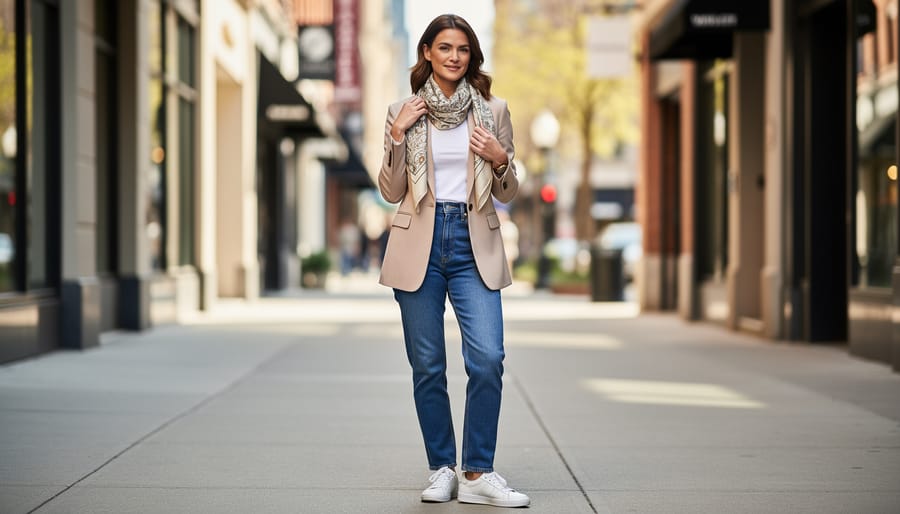
Try these tomorrow: Toss a denim jacket over your basic dress. Belt your oversized sweater at the waist. Drape a patterned scarf around your neck with your plain top and jeans. Add a blazer to your t-shirt and trousers combo.
The beauty of this rule is its flexibility. Your third piece can be functional (a coat when it’s cold) or purely decorative (a silk scarf in summer). Either way, it transforms your outfit from “got dressed” to “styled myself.”
5. Dress for Your Actual Life, Not Your Dream Life
I used to hang onto clothes for the life I imagined I’d be living, silk blouses for brunches I never attended, strappy heels for events that rarely materialized. My closet was full, yet I wore the same comfortable pieces on repeat because they matched my actual routine of school drop-offs, grocery runs, and occasional dinners out.
The shift happened when I cleared out everything I hadn’t touched in six months. The relief was immediate. Suddenly, getting dressed became easier because every option actually worked for my day.
Now I ask three questions before buying anything: Where will I wear this? What does it replace or complement in my current wardrobe? Can I wear it within the next week? If I can’t picture specific occasions or outfits, I pass.
This isn’t about giving up on aspirations, it’s about dressing for who you are right now. When your wardrobe reflects your real life, you’ll actually love opening your closet each morning instead of feeling guilty about what you’re not wearing.
6. Learn Your Best Proportions (Then Repeat Them)
I spent years buying pants in every rise imaginable before I finally admitted the truth: mid-to-high waisted bottoms just look better on me. Not because of some universal rule, but because they balance my proportions in a way that makes me feel pulled-together without trying. That simple realization changed how I shop.
Your best proportions are the silhouette ratios that make you feel like yourself on a good day. Maybe it’s cropped wide-leg pants with fitted tops, or relaxed boyfriend jeans with tucked-in shirts. Perhaps you love a midi skirt with an oversized sweater, or you feel most confident in streamlined head-to-toe looks.
The discovery process is half the fun. Try on different rises, lengths, and fits, then actually notice how you feel. Do you keep tugging at that low-rise waistband? Does that maxi dress make you feel elegant or swallowed? Pay attention to the outfits you reach for on days when you feel great.
Once you identify your proportions, lean into them. If high-waisted works, make it your go-to across jeans, trousers, and skirts. This repetition becomes part of your signature look, making shopping faster and getting dressed easier. You’re not limiting yourself, you’re honoring what genuinely flatters you.
7. Use Accessories as Your Style Signature
Here’s the truth about accessories: they do more heavy lifting than anything else in your closet. I learned this when I started wearing the same pair of hammered gold hoops every single day about five years ago. Friends began commenting that they looked so “me”, and suddenly I realized that repeating accessories, not constantly changing them, creates a signature style people recognize.
The beauty of building a small collection of go-to accessories is that they transform the same basic outfit into something that feels polished and intentional. That white tee and jeans? Completely different with sleek loafers versus chunky sneakers, or with a leather cuff versus delicate layered necklaces. You’re not buying a new wardrobe, you’re working smarter with what you already own.
Start by choosing one or two accessory categories that genuinely excite you, then build a small rotation within those:
- Jewelry: Pick a metal tone and stick with it for cohesion (all gold, all silver, or intentional mixing)
- Bags: One structured everyday bag and one casual crossbody cover most situations
- Shoes: Your reliable flats, boots, and sneakers become style markers when you choose distinctive shapes
- Scarves: Silk squares or lightweight knits add color and texture with minimal effort
- Belts: A quality leather belt in your preferred width instantly defines your waist and elevates basics
The financial relief here is real, too. Refreshing your look with a new pair of statement earrings costs a fraction of a new dress, and accessories rarely go out of style the way trendy clothing does. Those gold hoops I mentioned? They’ve outlasted dozens of impulse clothing purchases and still make me feel like myself every morning.
8. Create a Capsule for Each Season
I used to stand in front of my closet every morning, staring at a jumble of clothes that somehow never worked together. Then I learned about seasonal capsules, and mornings became so much simpler.
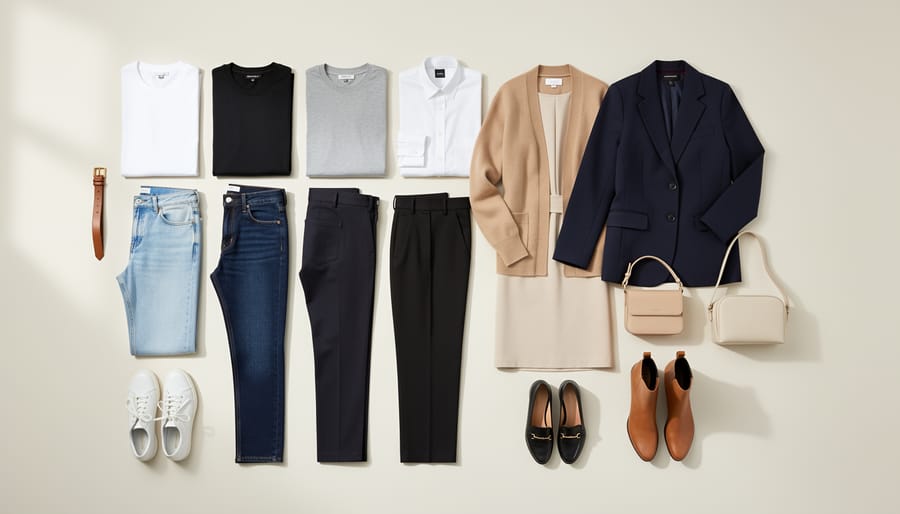
A capsule wardrobe isn’t about throwing everything out, it’s about curating 15-20 pieces per season that all play nicely together. Think of it as your starting lineup: a few great bottoms, tops that mix and match, one or two dresses, layering pieces, and shoes that work with most outfits. When everything coordinates, you can grab almost any two items and have a complete look.
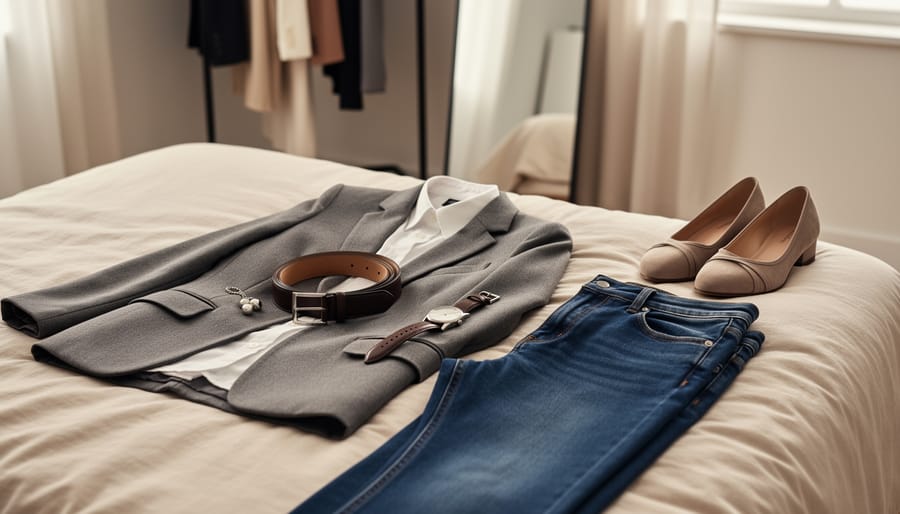
Here’s how to start without buying a single new thing. Pull out clothes appropriate for the coming season and lay them on your bed. Keep only pieces you actually wear and that fit your current life. Notice patterns in what you reach for, those are clues to your real style. Then identify gaps. Maybe you have five tops but only one pair of pants that goes with them.
The beauty is that capsules rotate. Your summer pieces rest while you wear fall favorites, then swap again. You’re not limiting yourself forever, just streamlining what’s in front of you right now.
9. Try Before You Commit to Trends
I learned this lesson the hard way when I dropped way too much money on a pair of wide-leg cargo pants that I was convinced would revolutionize my wardrobe. Spoiler: I wore them twice and felt like I was playing dress-up every single time.
Now I test-drive trends before committing. If something catches my eye, I’ll grab an affordable version from a fast-fashion retailer or see if a friend has something similar I can borrow for a weekend. This gives me a chance to actually live in the piece, wear it to run errands, sit in it at my desk, see how it feels after a full day.
Some trends just don’t work for your lifestyle or body, and that’s completely okay. On the flip side, I discovered my love for statement earrings through a $12 pair that I now reach for constantly. They felt bold and fresh, so I gradually invested in nicer versions that actually suit my style.
Trust your gut over what everyone’s wearing on Instagram. If a trend doesn’t feel like you after giving it an honest try, let it go without guilt. Your wardrobe should reflect your life, not someone else’s mood board.
10. Perfect Your Fit Formula
I used to think knowing my measurements was something only professional seamstresses needed to worry about. Then I spent an entire afternoon returning four pairs of jeans that looked perfect online but fit terribly in real life. That was my wake-up call.
Your fit formula is simply knowing the specifics that work for your body: your true waist measurement, your preferred jean rise (high, mid, or low), your ideal dress length, whether you prefer fitted or relaxed sleeves. When I finally measured myself properly and started noting what worked, shopping transformed from frustrating guesswork into efficient decision-making.
Take ten minutes this week to measure your waist, hips, inseam, and bust. Write them in your phone’s notes along with details like “28-inch inseam feels best” or “always size up in button-downs.” Next time you find jeans that fit perfectly, snap a photo of the tag showing the exact size and rise. This personal database becomes invaluable when shopping online or trying new brands. You’ll stop second-guessing yourself in fitting rooms and avoid the disappointment of items that never quite work, no matter how much you wanted them to.
11. Style for Comfort First, Then Refine
I used to think I had to choose between looking polished and feeling comfortable. Then I realized that tugging at waistbands, adjusting straps, or hobbling in pinching shoes was sabotaging any outfit, no matter how “stylish” it looked on the hanger. The truth is, when you’re physically uncomfortable, it shows in your posture, your expression, and your energy. Real style starts with feeling good in your clothes, then building up from there.
The good news is that comfort and style aren’t opposites anymore. Look for stretchy ponte pants that hold their shape, knit blazers that feel like cardigans, or soft jersey dresses with structure. Smart sneakers have come so far that you can wear them to dinner without looking underdressed. I keep a running list of brands and fabrics that work for my body, like anything with a hint of spandex in the denim or rayon blends that drape without clinging.
Start with the most comfortable version of each piece you need, then refine the fit and details to look intentional. A loose linen shirt tucked at the front, soft loafers instead of stiff dress shoes, or a knit midi skirt with an elastic waist can all look pulled-together when paired thoughtfully. You’re not sacrificing style by prioritizing comfort; you’re building a foundation that actually lets your personality shine through.
12. Document What Works (So You Remember It)
Here’s the thing about great outfits: we wear them, feel amazing, and then completely forget what we did when we’re staring blankly at our closet two weeks later.
I started snapping quick mirror selfies of outfits I loved, and it changed everything. Now when I’m running late or feeling uninspired, I scroll through my phone’s style folder and instantly remember combinations that work. It’s like having a personal lookbook that actually reflects my real life and real wardrobe.
You don’t need a fancy system. Some friends keep outfit photos in a dedicated album, others jot notes like “navy dress + tan belt + white sneakers” in their phone. I’ve even seen people use Pinterest boards to save their own looks alongside inspiration.
The key is capturing it somehow. When you nail an outfit and get compliments, document it before you forget. Your future self, rushing to get out the door on a Tuesday morning, will thank you for the reminder of what actually makes you feel put-together.
Your Questions About Fashion Styling, Answered
Where do I even start if my closet feels like a total mess?
Pick just one tip from this list that speaks to you, maybe it’s finding your color palette or trying the third-piece rule, and give yourself two weeks to practice it. You don’t need to overhaul everything at once, and honestly, starting small helps you build confidence without the overwhelm.
Should I follow trends if I’m trying to build a personal style?
Try trends through affordable pieces first, and only commit if they genuinely feel like you. Your personal style should be the foundation, with trends as optional accents that you can take or leave based on what actually makes you happy.
How much should I spend on basics?
Spend what you can reasonably afford on pieces you’ll wear constantly, a great pair of jeans or a perfect blazer earns its cost per wear. That said, tailoring a thrifted find often beats buying expensive pieces that don’t fit quite right, so focus on fit over price tags.
Can I really style well on a tight budget?
Absolutely, and some of my best outfits came together with secondhand finds and simple alterations. Focus on learning what works for your body and lifestyle first, then shop intentionally rather than impulsively, and you’ll build a wardrobe you love without breaking the bank.
How do I figure out what my personal style actually is?
Start paying attention to what you reach for on your happiest, most confident days, and notice patterns in colors, fits, and silhouettes. Your style is already there in those choices, you’re just learning to recognize it and build on it intentionally.
These questions come up all the time, and I get it because I’ve asked them myself while staring into my closet feeling completely stuck. The truth is, there’s no perfect answer that works for everyone, but the common thread is always the same: start where you are, trust what feels good, and give yourself permission to experiment without pressure. Your style journey is yours alone, and it’s supposed to be fun, not stressful.
Here’s the thing about fashion styling that I want you to remember: it’s supposed to make your life easier, not harder. These tips aren’t rules you need to follow perfectly. They’re tools you can pick up when you need them.
Start small. Maybe you’ll try the third-piece trick tomorrow, or finally book that tailoring appointment you’ve been putting off. Perhaps you’ll simply notice which colors make you feel most like yourself. That’s enough. Style doesn’t happen overnight, and honestly? It keeps evolving as we do. The outfits that made me feel amazing five years ago aren’t the same ones I reach for now, and that’s exactly how it should be.
I’d love to hear which tip resonated most with you, or if you have your own styling secret that makes getting dressed feel less like a chore and more like a small daily celebration. Drop a comment below and let’s keep this conversation going. After all, there’s real joy in that moment when you catch your reflection and think, “Yes, this is me.”